2026-08-27
How long does a mattress last?
The rule of thumb is eight to ten years. The figure is useful and still misleading, because it treats a mattress as a consumable with an expiry date. What decides it is not age but whether it still supports you where the weight sits. Some are finished after five years, others are not after twenty.
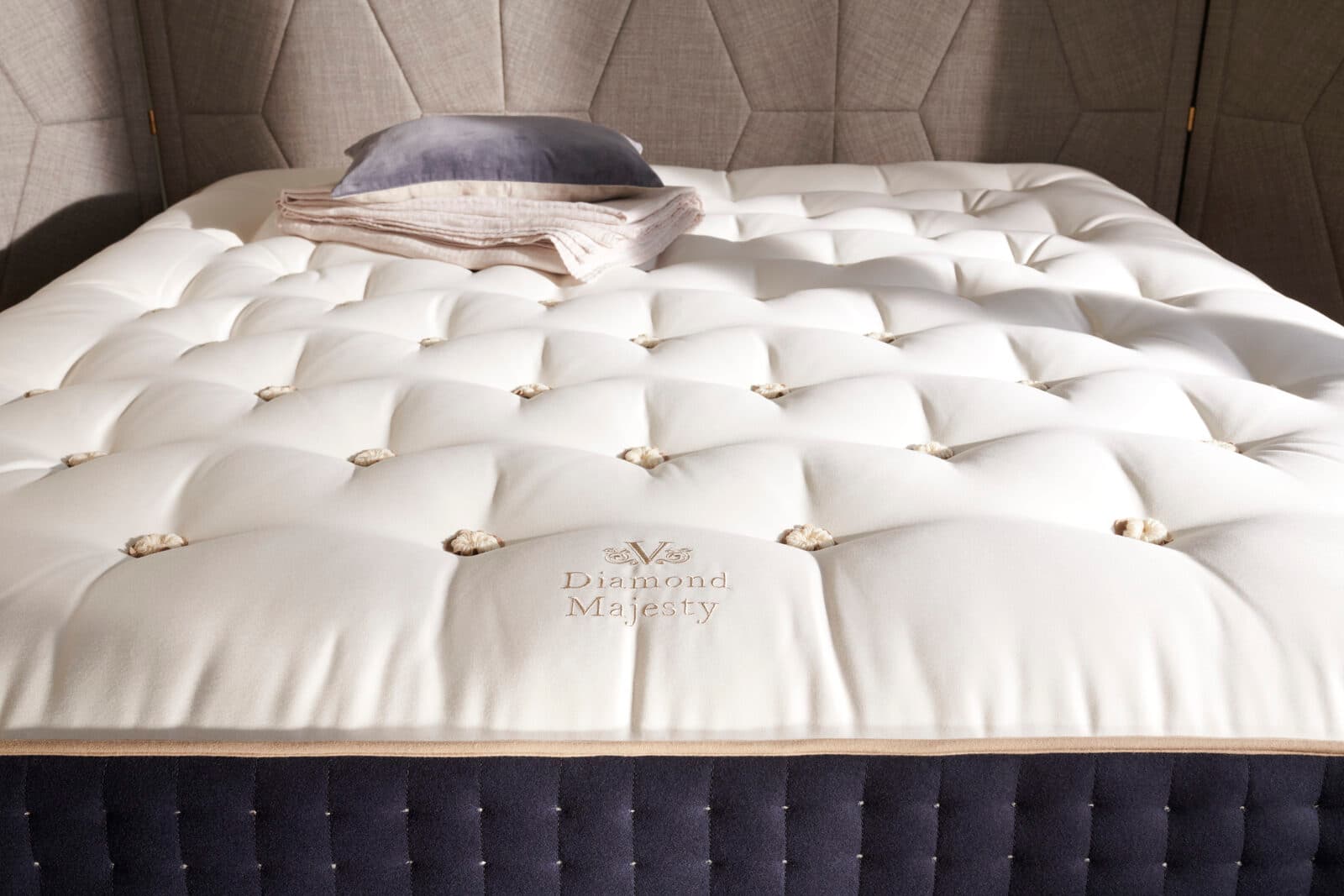
What determines lifespan is mainly construction. A foam mattress loses resilience fastest; six to eight years is realistic, less with cheap foam. Pocket springs last longer, because steel fatigues more slowly than foam. And a hand-tufted mattress of natural materials sits above that again, because its layers are not glued and can be renewed in parts.
The most honest test is not a test but an observation: if you regularly sleep better in a hotel or at a friend's than at home, the bed is the subject. The reverse holds too. If you sleep badly everywhere, look first at habits and health, not at furniture.
The visible signs arrive later than the felt ones. A hollow of more than two or three centimetres that stays after hours without load is unambiguous. Before that you notice it in your body: you wake with pain in the lower back or shoulder that fades over the morning. That pattern in particular points at the mattress and away from everything else.
Turning over says something too. Changing position noticeably often at night usually means no lying point stays comfortable for long. That is pressure an exhausted upper layer no longer spreads, and it costs deep sleep without you knowing in the morning why you are tired.
Then there is the hygienic part, which deserves a sober look. A person gives off several decilitres of fluid a night. Materials that take up moisture and release it again, meaning horsehair, new wool and cotton, dry out between nights. Closed foam barely does, and that is exactly where a mattress grows heavy and clammy over the years.
Lifespan can be extended with surprisingly little effort. A mattress protector catches most of it and is washable, which the mattress is not. Folding the duvet back in the morning instead of smoothing it straight away lets moisture escape. And depending on the model, turning it regularly spreads the load; not every mattress is built for that, so the maker's instructions are worth reading.
The base is underrated. A sagging slatted frame, or one with gaps too wide, will finish off the best mattress within a few years. If a new mattress starts feeling wrong again after a short time, the cause is more often underneath it than on top of it.
A new topper does not rescue a tired mattress. It changes how the surface feels and therefore hides a support problem instead of solving it. As an addition to an intact mattress a topper makes sense; as a repair it does not. Buying one because the hollow bothers you buys time, not a solution.
The difference with handmade beds lies less at the beginning than at the end. Nobody can open glued foam layers; a tufted mattress of natural materials can be reworked and re-tufted. That is the real reason such beds reach decades, and why the sum per year of sleep looks different from the price on the label.
Children's mattresses follow their own logic. They rarely last as long as the number on the packaging, because children grow, sweat and occasionally wet the bed. Here a washable protector is not a recommendation but a requirement, and replacement follows body height rather than years.
For allergy sufferers a sober assessment is worth it. House dust mites live on skin flakes and moisture, not on the age of the mattress. What decides it is therefore less how old it is than how well it dries and whether a washable cover lies over it. An old, well-aired mattress can be in better shape than a new one that never airs out.
That leaves the question of where the old one goes. In Switzerland many retailers take the old mattress away on delivery, and municipalities have collection points for bulky waste. Ask about it before ordering; it is easier arranged in advance than on the delivery day.
Frequently asked questions
How often should you replace a mattress?
Eight to ten years is a rule of thumb, not an expiry date. What decides it is whether it still supports you: a lasting hollow, waking with pain that fades during the day, or sleeping noticeably better elsewhere are the more reliable signs.
How do I know my mattress is finished?
In your body before your eye. You wake with back or shoulder pain that eases over the morning, you turn unusually often at night, and you sleep better elsewhere. A visible hollow over two or three centimetres only confirms it.
Does a topper help a sagging mattress?
No. A topper changes how the surface feels and hides a support problem instead of solving it. On an intact mattress it is a sensible addition; as a repair it only buys time.
How do I make it last longer?
A washable protector, folding the duvet back in the morning instead of smoothing it straight away, and turning it regularly depending on the model. Check the slatted base too: a sagging frame ruins even a good mattress in a few years.
Keep exploring