Craft & materials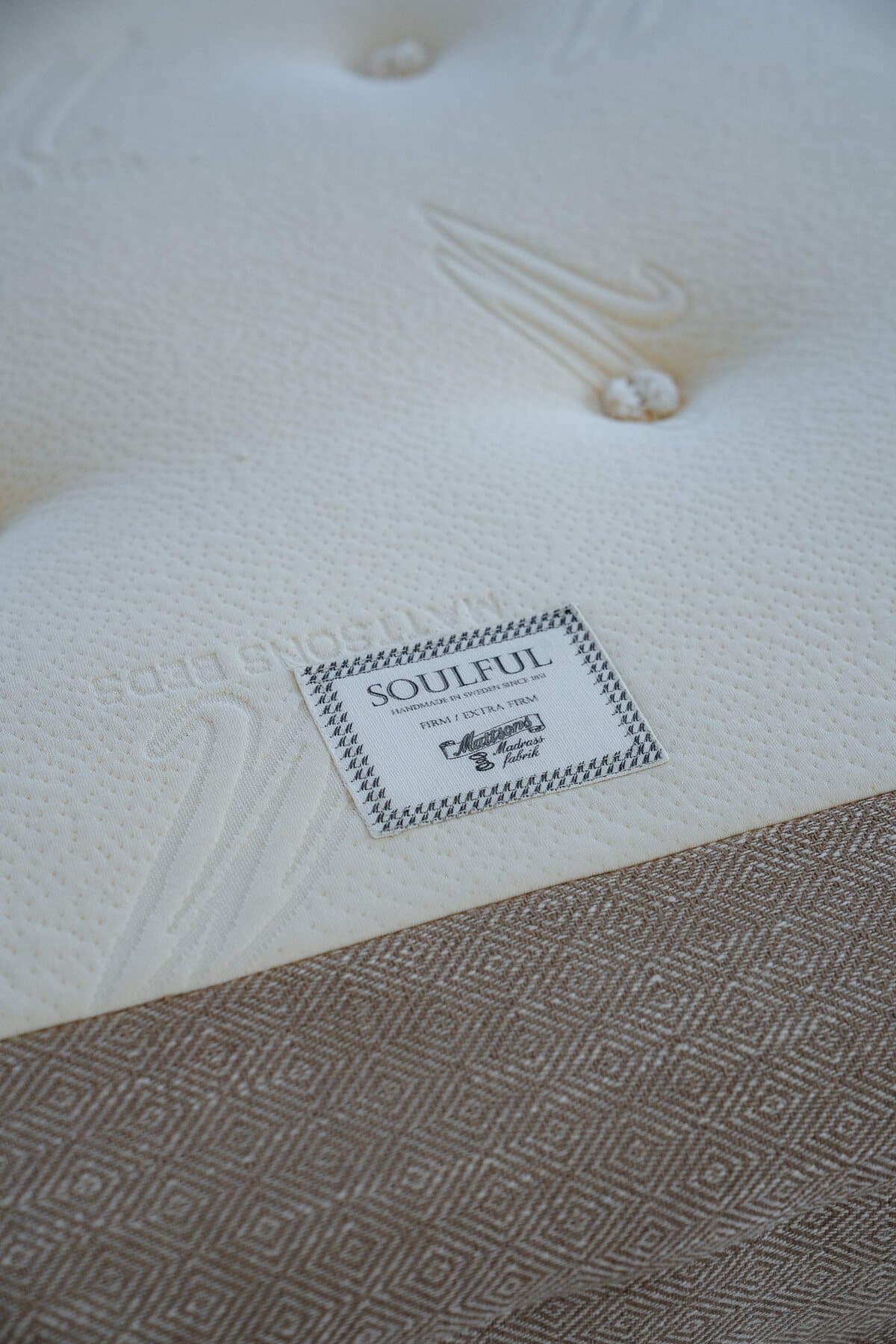
Hand-tufted
Hand-tufted beds: Swedish craftsmanship since 1851
Tufting is the oldest technique in mattress making and the reason a handmade bed still holds its shape after decades. What happens during it, why no machine can replace it, and how Mattsons has been doing it for almost two centuries.
Mattsons has made beds in Sweden since 1851
Every tuft set by hand
Filling layers cannot shift
Shape is kept for decades
What happens during tufting
In tufting the mattress is stitched through from top to bottom at many points and each stitch is secured with a small tie. This holds the filling layers permanently in place so they cannot shift or bunch up.
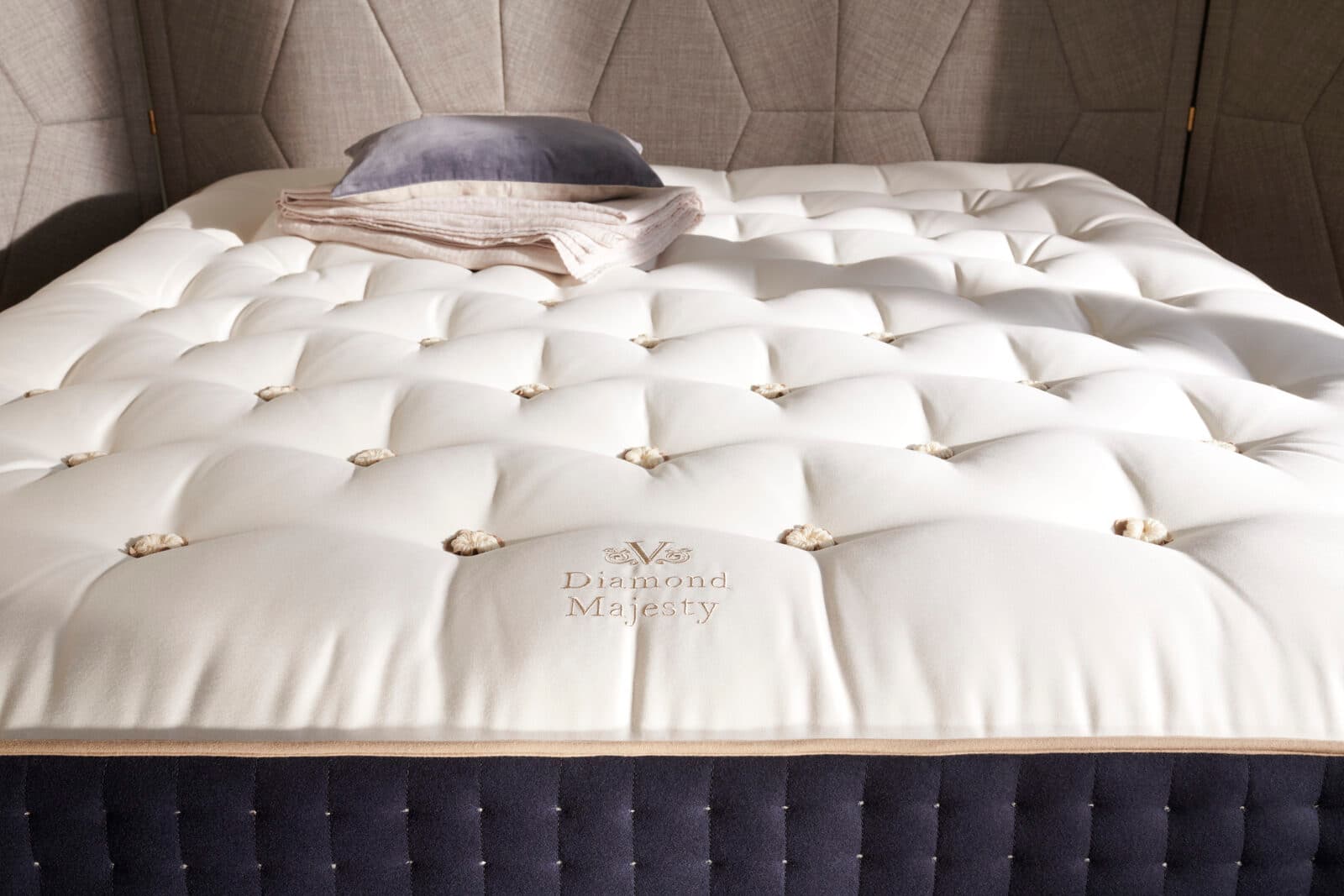
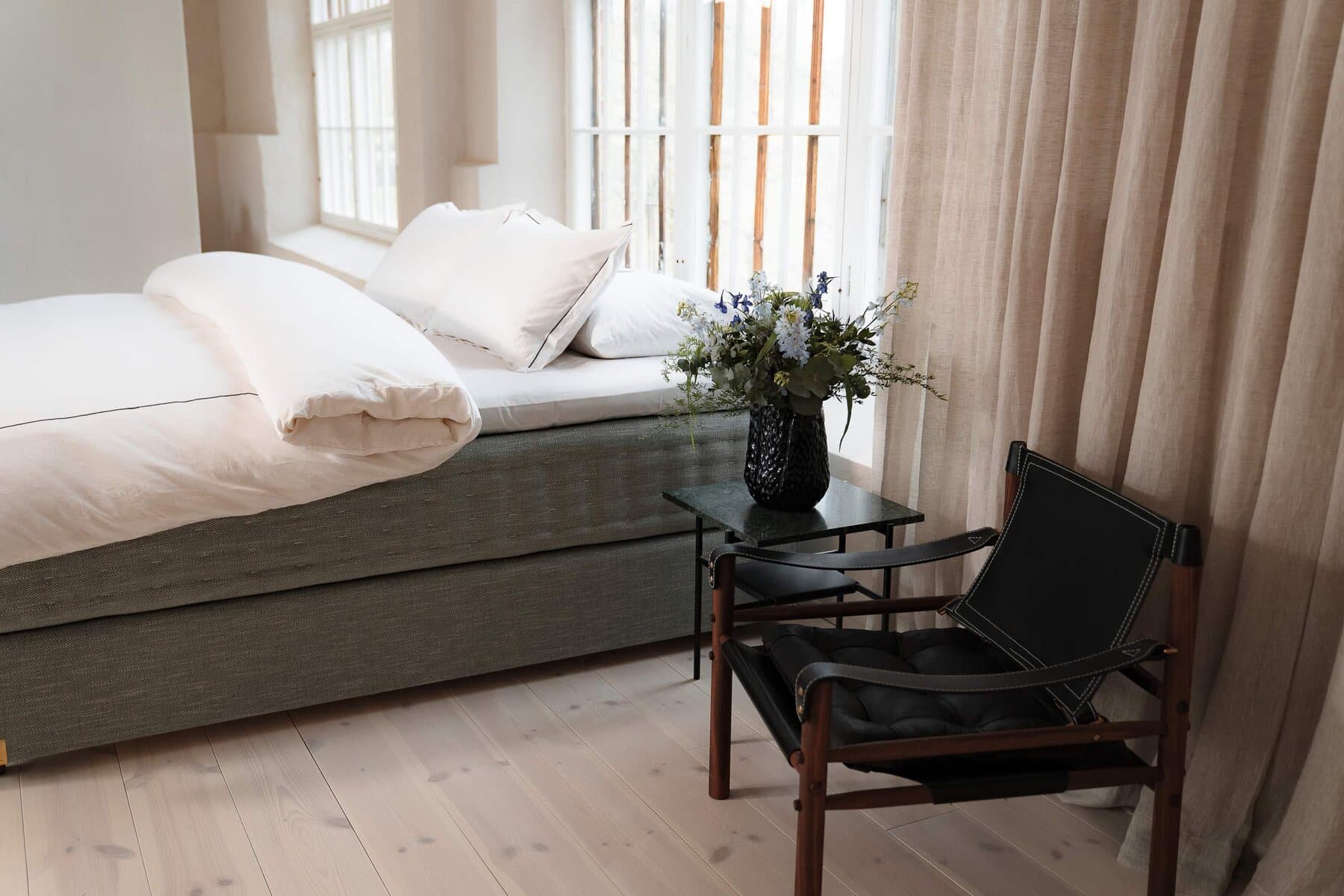
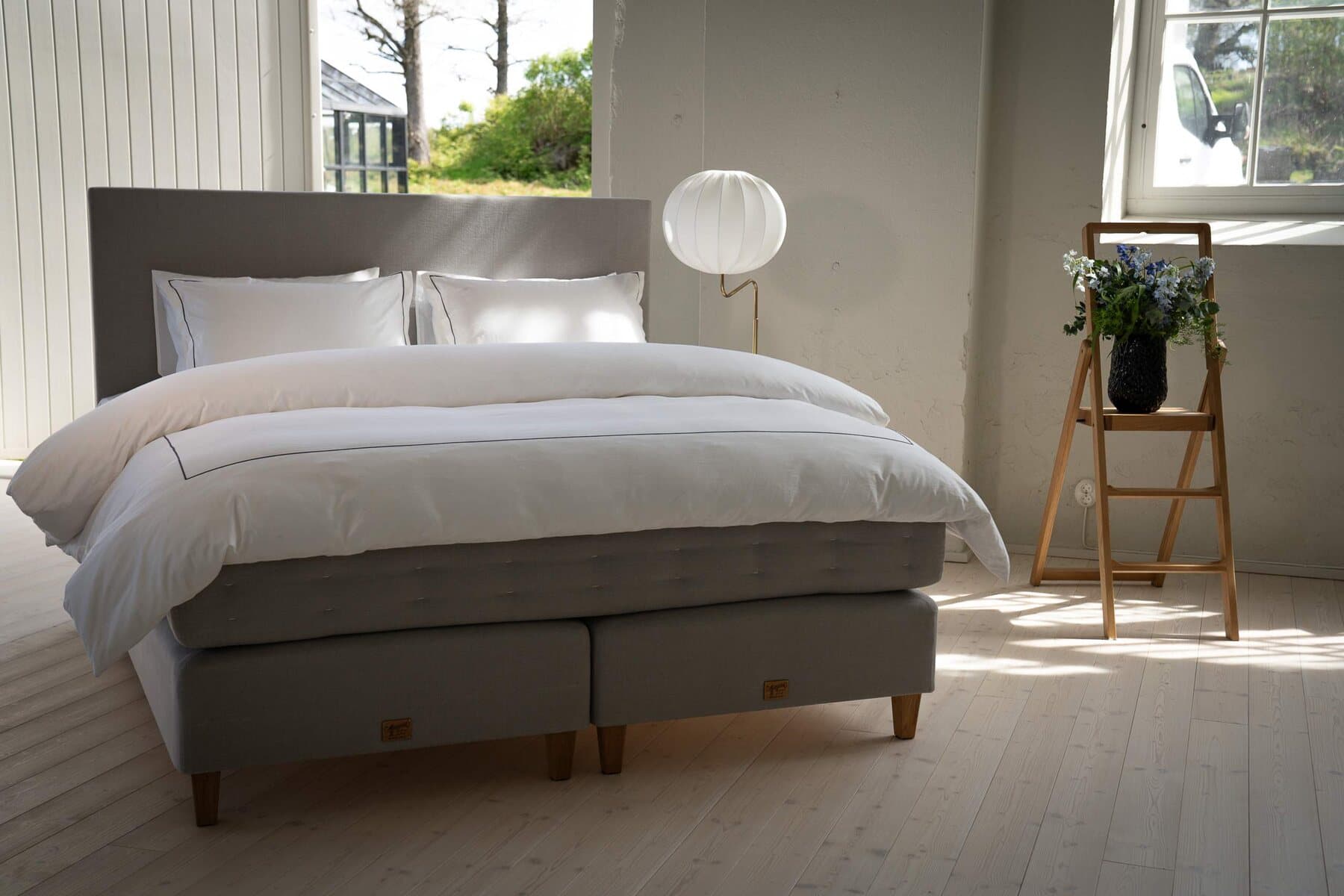
You can see it in the characteristic dimples on the surface. They are not a design feature but the visible result of a technique that has existed for centuries because it works.
Why no machine takes this over
Every tuft has to be set with the right tension. Too tight and the mattress becomes hard and uneven. Too loose and the layers do not hold. An experienced maker feels that tension; it cannot simply be dialled in as a machine setting.
Mattsons has been making beds in Sweden since 1851. The skills and the approach are passed from one generation to the next, and every bed leaves the workshop made by hand.
How to recognise it
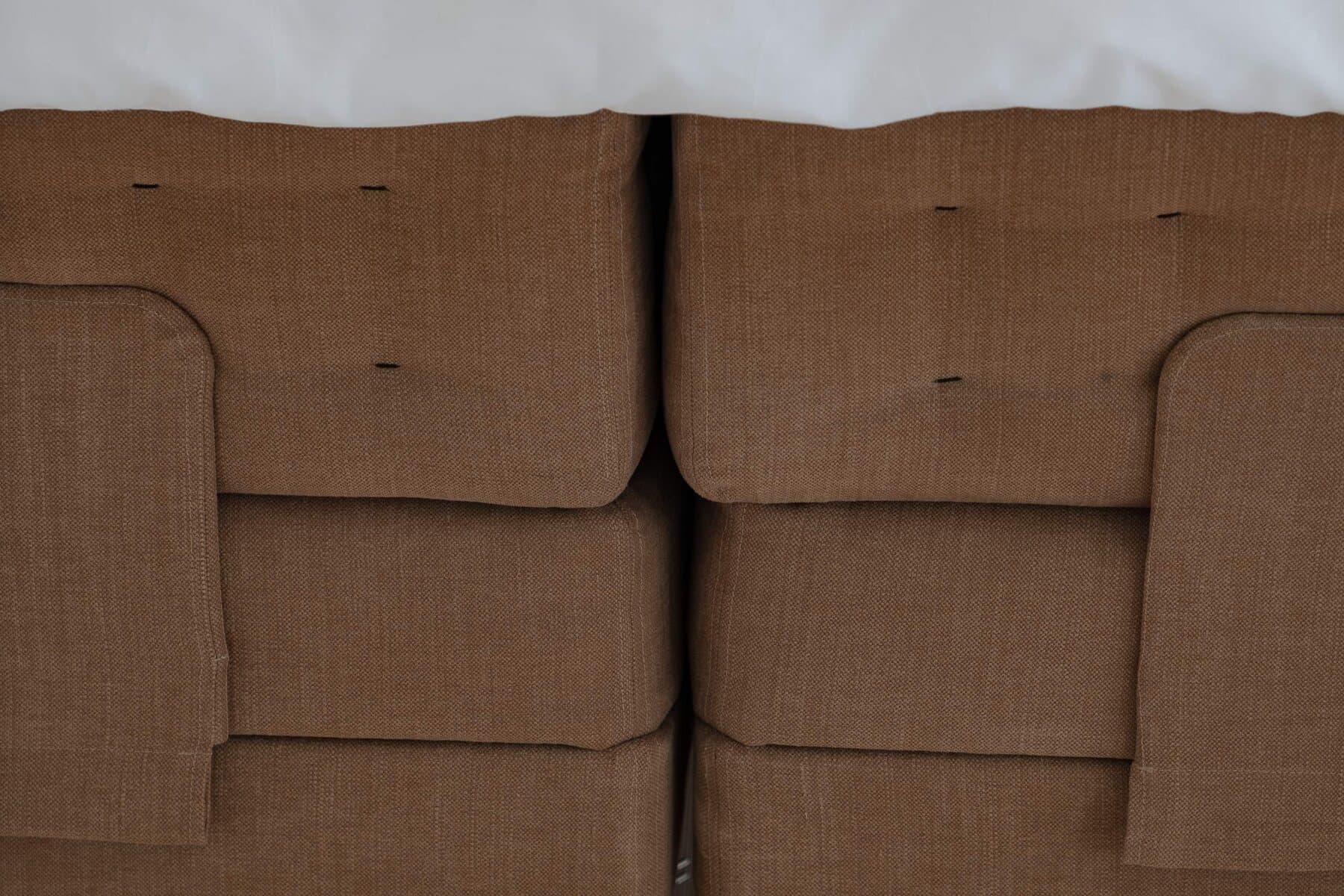
Look at the tufts: are they evenly spaced, is the tie cleanly finished, is the stitch firm? And look at the border: a hand-stitched side holds its shape even where you push down to get up.
Both are set up in our showroom, and we are happy to compare them directly with a machine-made mattress.
What it feels like
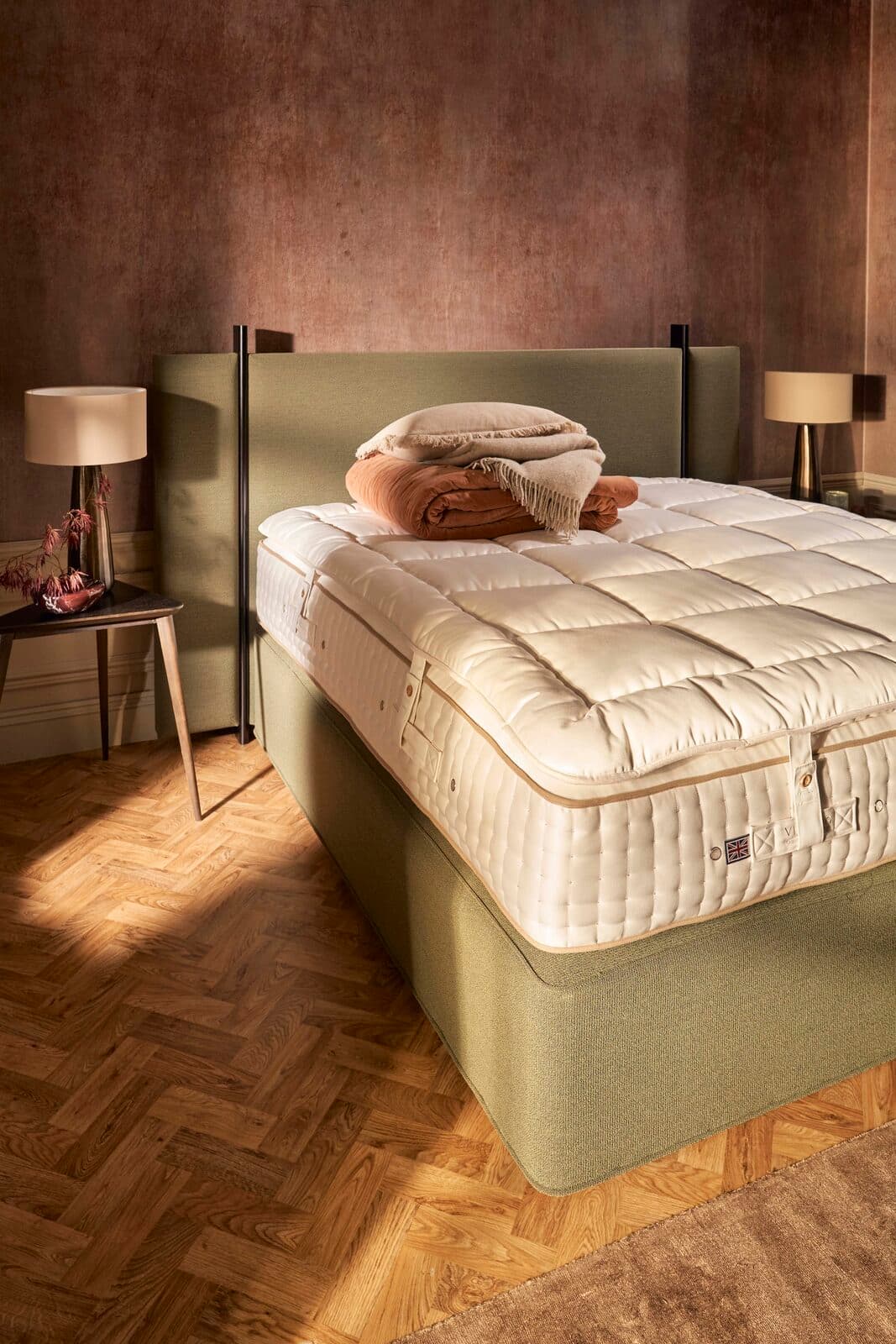
These models are set up in the showroom so you do not read about the difference but feel it.
Frequently asked
Do the dimples bother you when lying down?
No. You lie on the topper and the uppermost filling layers, and you do not feel the tufts in everyday use. On the contrary, they are what keeps the filling even.
What is the difference between a Swedish and an English bed?
The tradition, and with it the feel. Swedish beds such as Mattsons tend to be tuned a little calmer and more even, while English beds such as Vispring work more with spring layers and natural filling. Which suits you better is decided by your body, not by a description.
Feel it yourself
Differences in material are hard to explain and immediate to feel. Come to Talstrasse 66 and compare in your own time.
- Talstrasse 66, 8001 Zürich
- +41 43 333 00 11