Craft & materials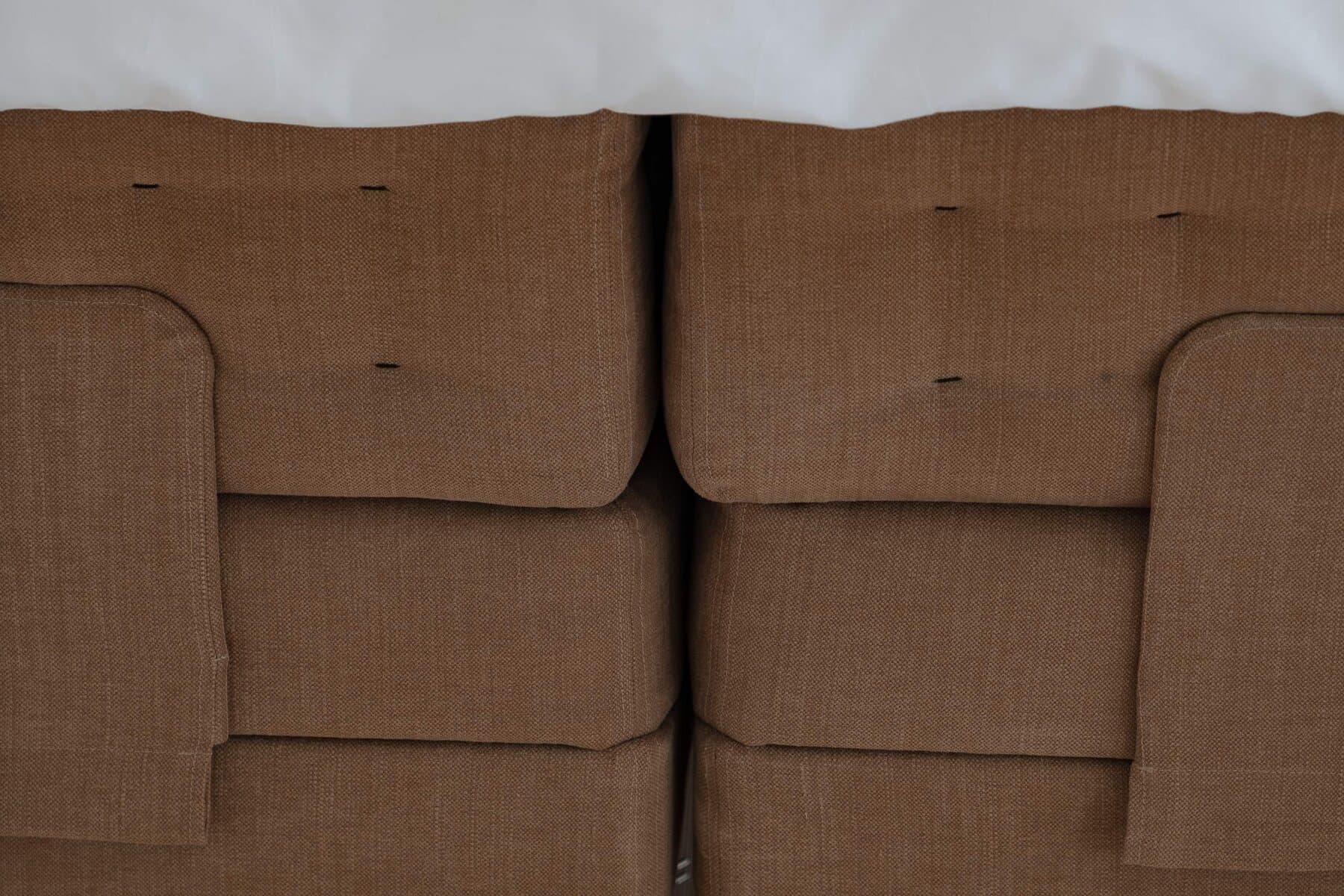
Natural materials
Natural materials in a bed: wool, cashmere, cotton, and what sets them apart
Wool warms and cools at the same time, cashmere is finer than any synthetic fibre, cotton keeps everything dry. An overview of what each natural material does in a bed and why the mix is what matters.
Wool: absorbs moisture, stays dry
Cashmere: finest fibre, top layer
Cotton: structure and moisture transport
No glued layers, everything by hand
New wool: the climate regulator
Wool can absorb many times its own weight in moisture without feeling wet. In a bed that means you sweat less, and when you do, the surface stays dry. At the same time the crimped fibre insulates, which is why wool feels warming in winter and balancing in summer.
Cashmere and silk: the fineness on top
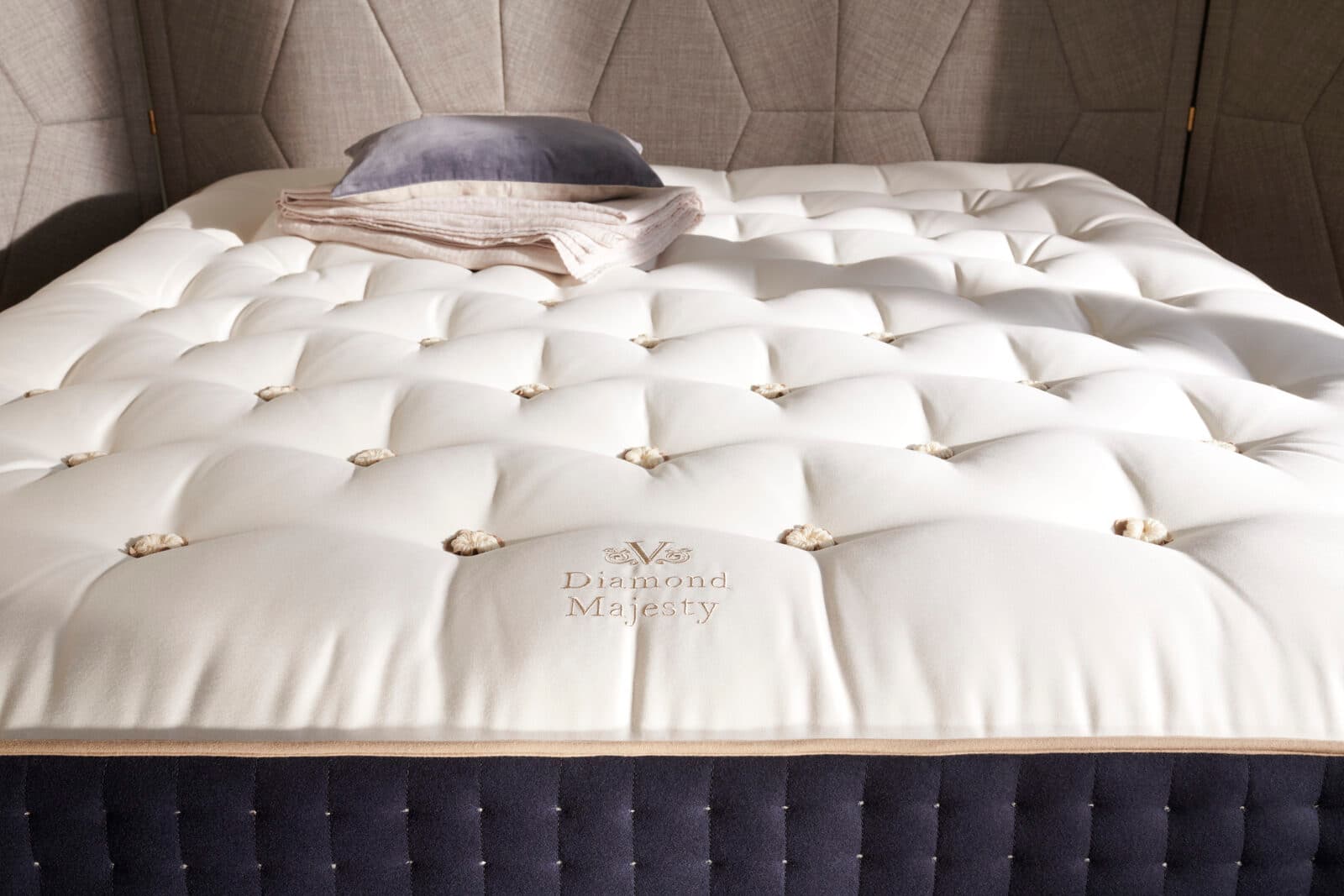
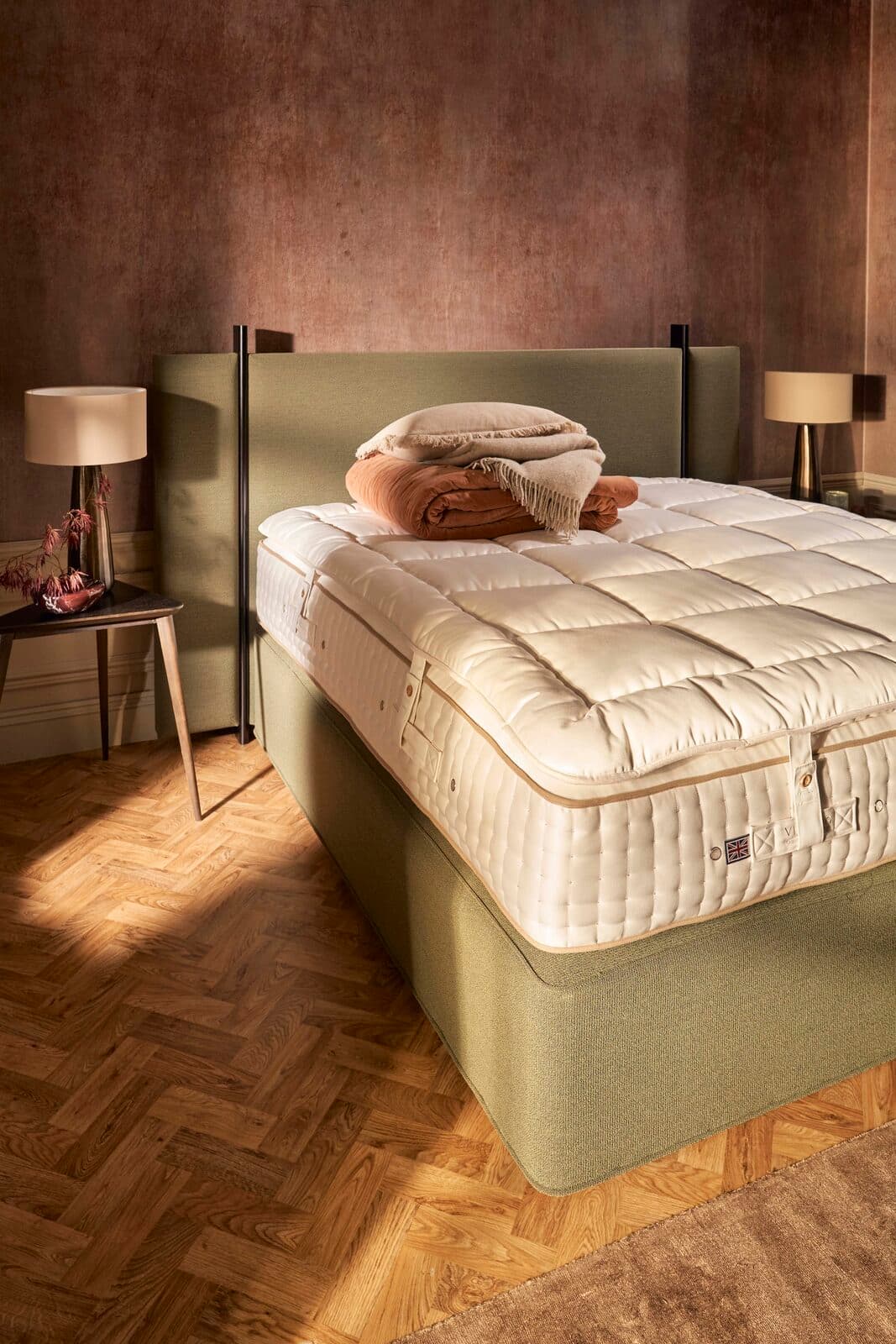
Cashmere is considerably finer than sheep's wool and is therefore used in the uppermost layers, where the body feels the material directly. It is the difference between a good mattress and an exceptional one. Vispring uses cashmere and silk in its top models.
Cotton and linen: the structure
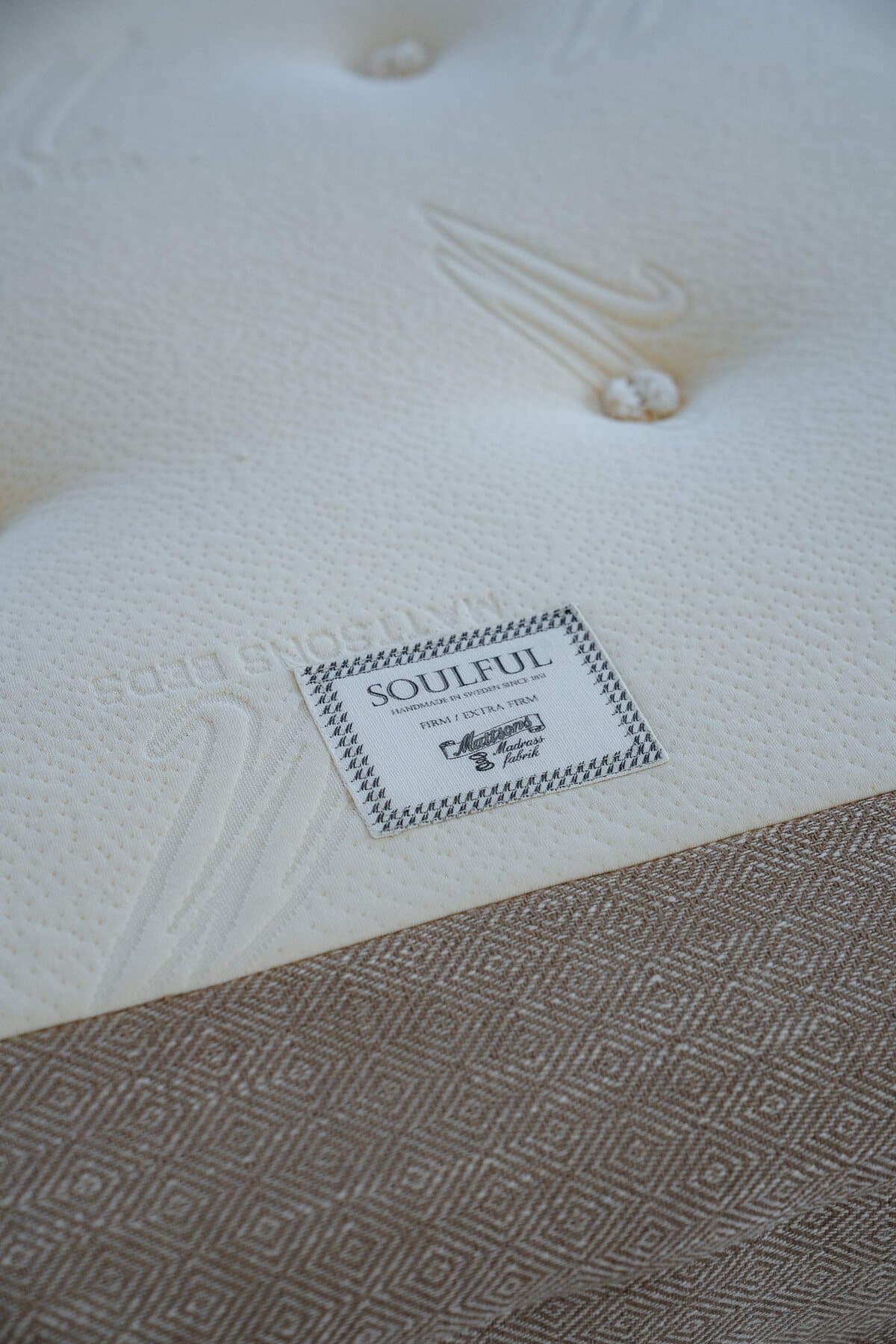
Cotton gives the filling structure and moves moisture on instead of storing it. It is the quiet backbone of many builds, often combined with wool. Mattsons additionally uses undyed, pale natural fabrics for its covers.
What all natural materials share is that they work. They absorb, release, expand and contract. A bed made of natural materials lives with you rather than merely lying underneath you.
What it feels like
These models are set up in the showroom so you do not read about the difference but feel it.

Frequently asked
Are natural materials high-maintenance?
No. Air the room regularly, turn and rotate the mattress, use a mattress protector, and that is enough. The protector is washable and keeps the filling clean.
Why not simply foam or latex?
Foam is cheaper and dimensionally stable, but it barely regulates moisture and loses resilience over the years. Natural materials breathe, work with the body's climate and keep their properties far longer. The difference is immediately noticeable when you lie on them.
Feel it yourself
Differences in material are hard to explain and immediate to feel. Come to Talstrasse 66 and compare in your own time.
- Talstrasse 66, 8001 Zürich
- +41 43 333 00 11