Pocket springs
Hand-nested pocket springs: why every spring works on its own
The pocket spring was invented in 1901 because an engineer wanted to give his wife better sleep. How it works, what “hand-nested” actually means, and how you notice the difference from mass production.
The idea behind it
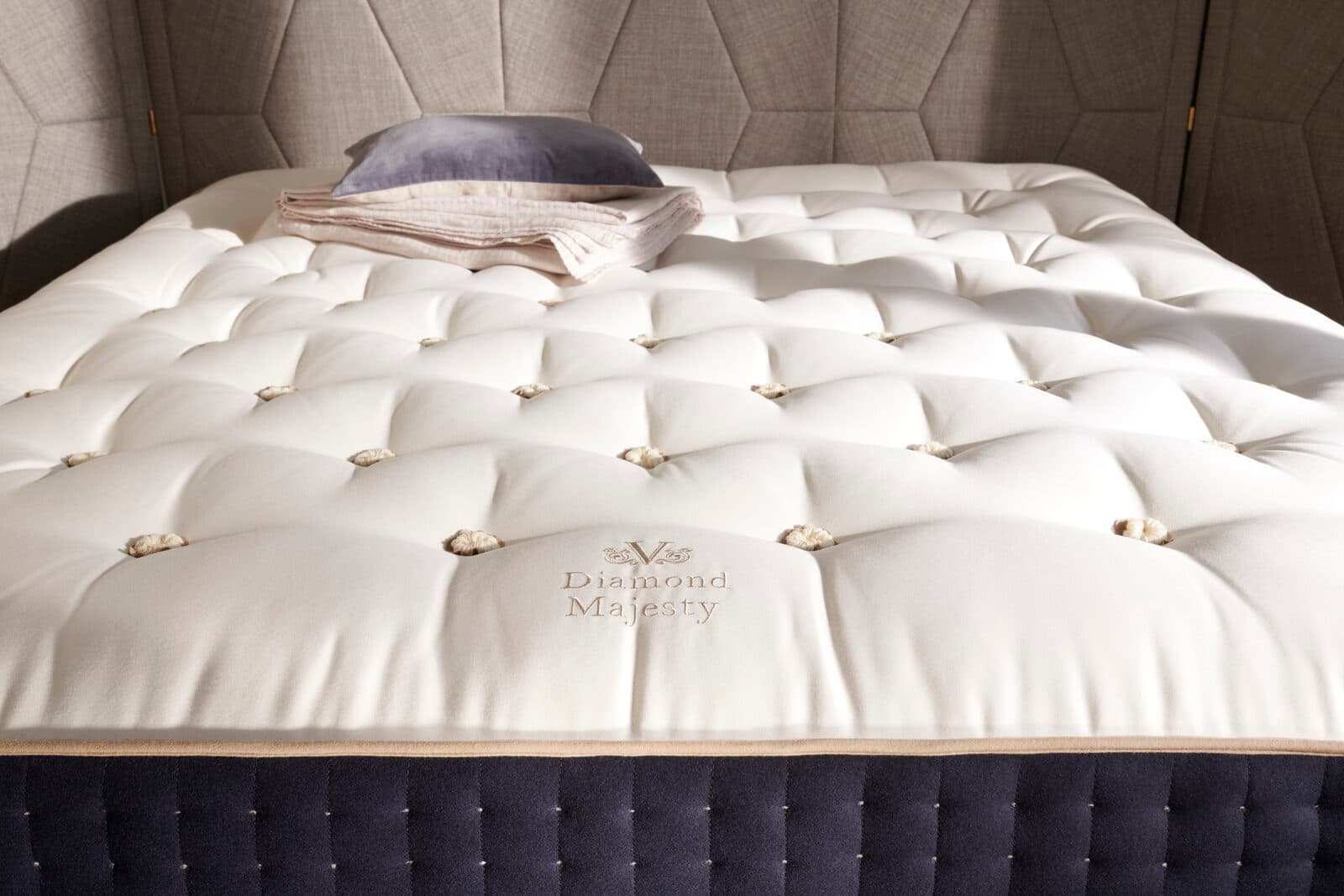
In 1901 the English engineer James Marshall was the first to sew steel springs into individual fabric pockets. The effect: every spring moves independently of its neighbours. Where a continuous spring core makes the whole surface move, with pocket springs only the point carrying weight yields.
In practice that means you do not feel it when the person beside you turns over. And shoulder, waist and hip are supported differently instead of being treated as one surface.
What “hand-nested” means
In industrially made mattresses the spring pockets are glued together by machine. Hand-nested means the pockets are tied to one another with twine, row by row. That takes time, but it holds without adhesive and lets the spring core stay flexible.
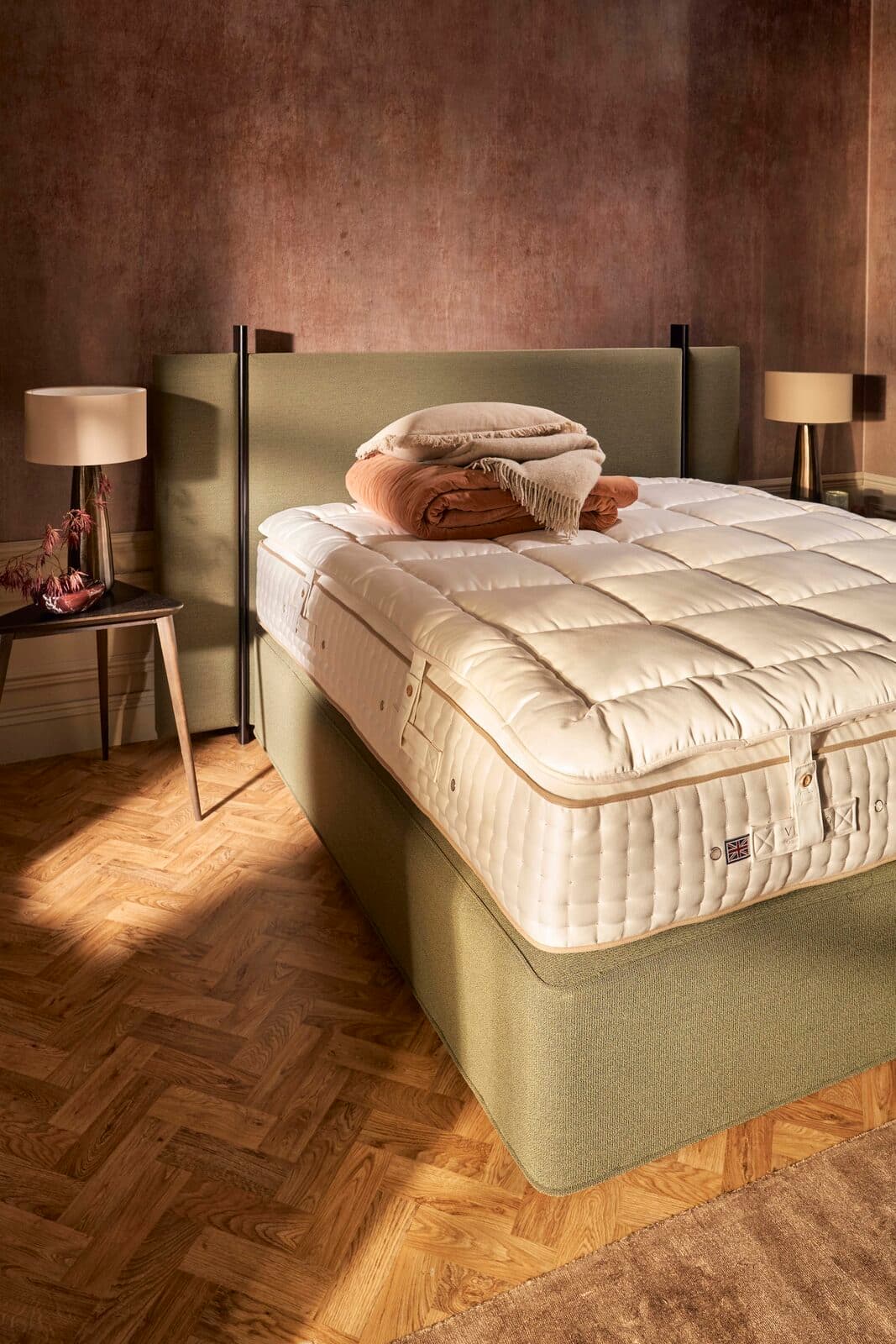
Then there is the hand-side-stitching: the border of the mattress is sewn through by hand so that the edge stays firm and the mattress does not break down at the sides over the years. Vispring has made its beds in Plymouth since 1901 and received the Queen's Award for Enterprise in 2012.
How many springs make sense?
The spring count alone says little. What matters is wire gauge, the number of spring layers and what lies above them. Two spring layers, as in the top models, do more than a high count in a single layer. Ask to see the builds in cross-section; that explains more than any number.
What it feels like
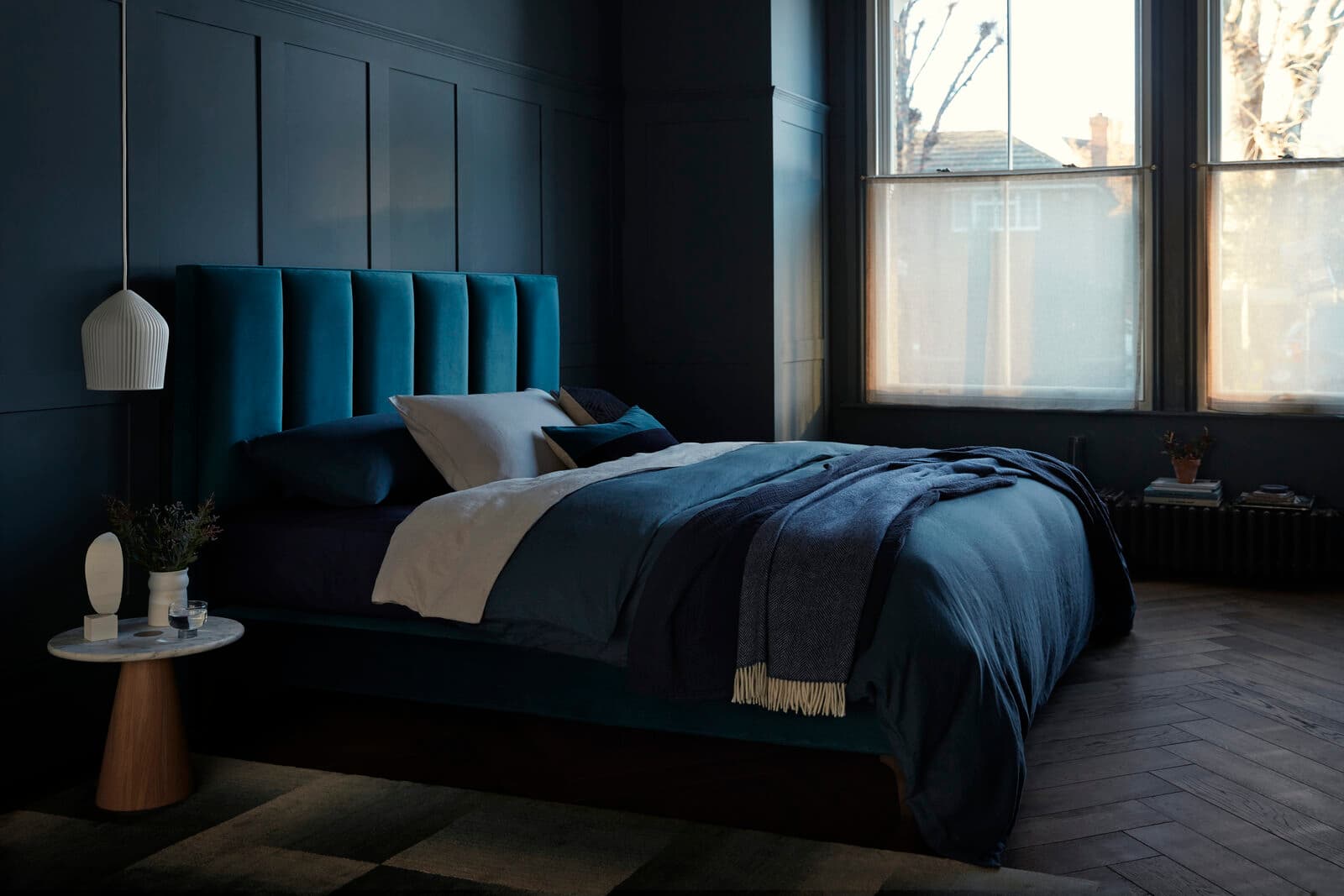
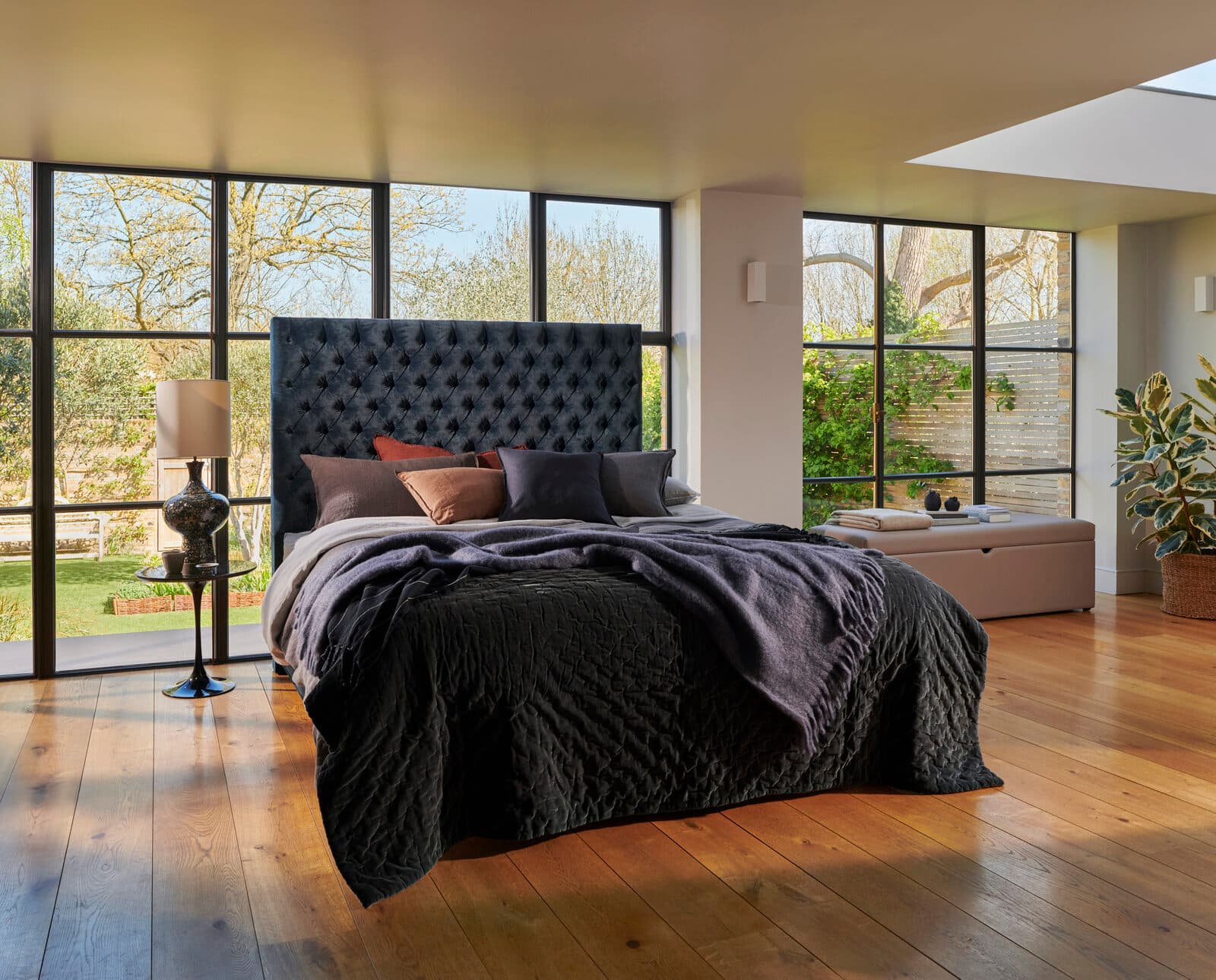
These models are set up in the showroom so you do not read about the difference but feel it.

Frequently asked
What is the difference from a box spring bed in a furniture store?
The construction. Inexpensive box spring beds use bonnell or glued pocket-spring cores with foam toppers. Here the springs are individually pocketed and hand-nested, and the topping is natural filling. You feel the difference when you lie down, and even more clearly after a few years.
Does it need a special slatted base?
Usually not, because these beds come with a matching base. Which combination makes sense for you depends on weight, sleeping position and room height, and we work that out together.
Feel it yourself
Differences in material are hard to explain and immediate to feel. Come to Talstrasse 66 and compare in your own time.
- Talstrasse 66, 8001 Zürich
- +41 43 333 00 11